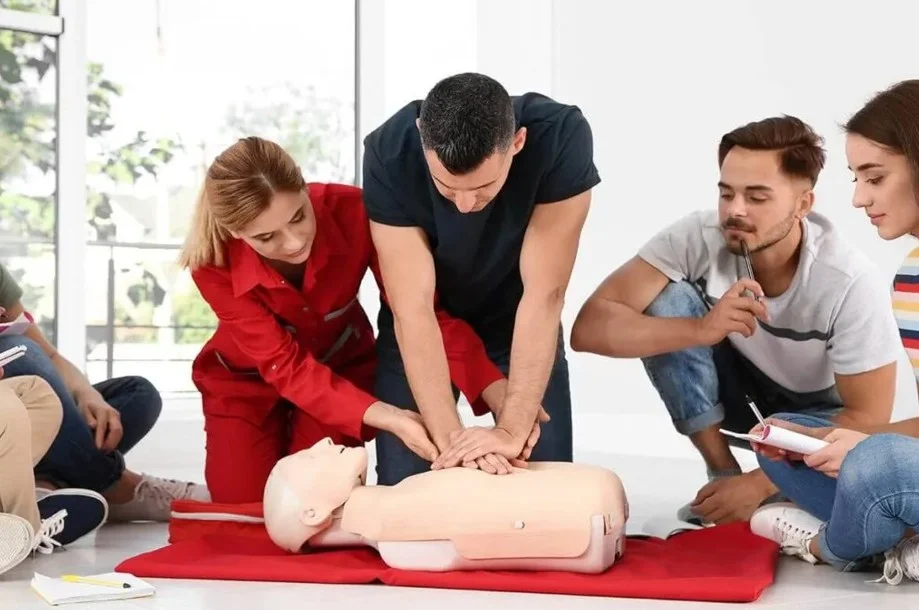
CPR/AED certification is not one single thing. It is a family of course levels, and picking the wrong one is the most common mistake people make when an employer, coach, or school program tells them to just get certified. Coast2Coast First Aid trains residents across Regina, from staff at the Co-op Refinery Complex and Evraz Steel plant to students near the University of Regina and small businesses in the Warehouse District downtown. Before booking anything, it is worth understanding what CPR/AED certification actually includes, since the course that satisfies one employer might not satisfy another. Getting it right the first time also avoids the added cost and lost time of registering twice because the wrong level was booked.
The confusion usually comes down to naming. CPR, AED, BLS, and first aid all get used loosely in casual conversation, but each one refers to a specific course with a specific scope, and mixing them up can mean showing up for the wrong class entirely.
Regina’s mix of industrial employers, like the Co-op Refinery Complex and Evraz’s steel operations, and its growing service and education sector around the University of Regina, means the right certification level genuinely varies by workplace. What satisfies a downtown retail employer will not satisfy an industrial site’s hazard classification.
Key Takeaways
- CPR/AED certification covers chest compressions and use of an automated external defibrillator, but not broader first aid response.
- Level A covers adult response, while Level C adds child and infant response, which is the version most workplaces and parents actually need.
- Coast2Coast First Aid holds four Canadian Red Cross Awards every year since 2023, including Top 3 Provincial Training Providers.
- Digital certificates arrive within 48 hours, which matters when a job or volunteer role has a start date attached.
- Most first aid certificates last three years, but an annual CPR/AED refresher is recommended in between.
What’s Actually Inside a CPR/AED Course?
A CPR/AED course teaches recognizing cardiac arrest, performing chest compressions at the correct rate and depth, and operating an AED safely, including on someone who may be wet, on a metal surface, or wearing a medical device. It does not cover wound care, fractures, or general first aid response, which is why some employers require a combined first aid and CPR-C course instead of CPR alone.
Which Certification Level Do You Actually Need?
Use this quick reference before registering for the wrong course.
- Adult-only workplace with no children present: CPR/AED Level A.
- Most workplaces, coaching roles, or households with kids: CPR/AED Level C, covering adult, child, and infant response.
- Workplace with a legal minimum first aider requirement: Intermediate/Standard First Aid plus CPR-C, the 16-hour workplace compliance standard.
- Lower-risk small office or retail environment: Basic/Emergency First Aid plus CPR-C, an 8-hour course.
- Healthcare role: Basic Life Support (BLS), not standard CPR/AED, since it covers protocols standard courses skip.
Anyone still unsure after checking this list can call a training provider directly and describe the actual job or activity in plain terms. A five-minute conversation before registering is faster than discovering the wrong course was booked after showing up to the wrong session.
How Coast2Coast First Aid Makes the Skill Stick, Not Just the Certificate
An instructor at the company has described an early first aid course that was almost entirely lecture and a final quiz, and how a real hands-on evaluation later revealed how little of that training had actually transferred into usable skill. That is why the company weights its own courses toward manikin practice rather than slides, since the science on this is consistent: skills performed under stress are muscle memory, built through repetition rather than recall. Regina residents booking a course for the first time often find the hands-on portion is the part that actually sticks months later, long after the specifics of a lecture slide have been forgotten.
About Coast2Coast First Aid
Employers and program coordinators in Regina who specify a certification requirement in a job posting or registration form are usually working from a specific course name for a reason, often tied to insurance or regulatory requirements behind the scenes. Treating that requirement as a suggestion rather than a specific course level is one of the more common reasons a new hire’s paperwork gets bounced back for correction.
Coast2Coast First Aid is a Top 3 Canadian Red Cross Training Partner for 2023, 2024, and 2025, and a Heart & Stroke accredited trainer, with courses aligned to provincial OHS requirements and CSA Z1210 curriculum standards. The company has certified more than 150,000 students since 2014, holds a 99.9% student success rate, and runs 100 or more courses per week across 30-plus locations in Canada and the United States, in both blended and full in-class formats.
FAQs
Is CPR/AED certification the same as first aid certification?
No. CPR/AED focuses specifically on cardiac response and defibrillator use, while first aid certification covers a broader range of injuries and medical situations.
How long does CPR/AED certification last?
It is typically bundled into a certificate valid for up to three years, though an annual refresher is recommended since hands-on skill fades faster than the paper certificate suggests.
Can I take the whole course online?
The skills portion cannot be done online. Blended formats let you complete theory online, then attend a shorter in-person session for the hands-on evaluation.
Who is Coast2Coast First Aid?
Coast2Coast First Aid is a Top 3 Canadian Red Cross Training Partner for 2023, 2024, and 2025, offering CPR, first aid, and Basic Life Support certification across Canada and the United States, with more than 150,000 students certified since 2014.
This article is for general informational purposes and is not medical or legal advice. Workplace safety requirements in Saskatchewan are subject to provincial OHS regulations.