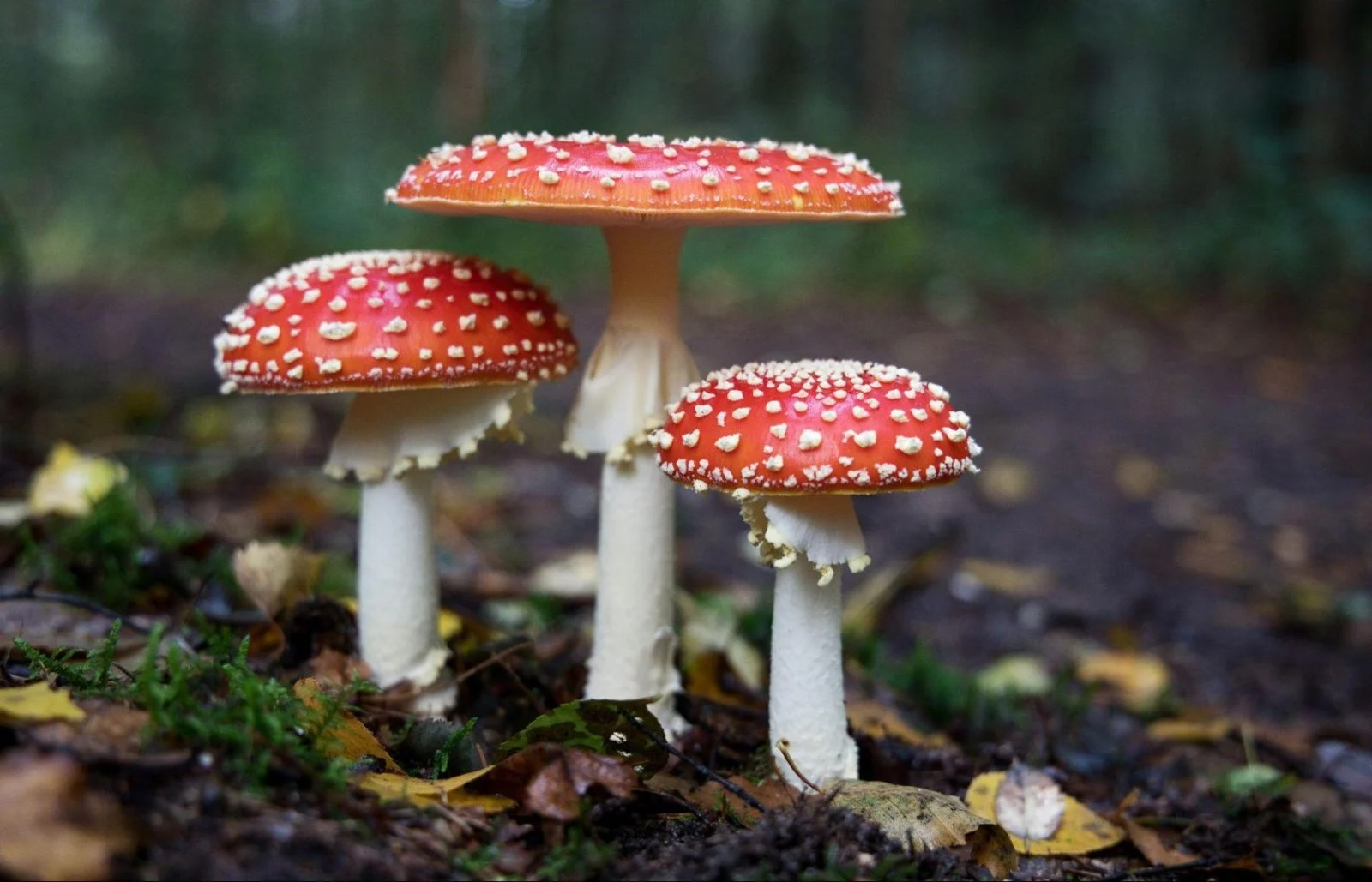
Mushrooms are among the most unusual organisms on Earth. Although they are often associated with cooking, forest floors, and occasionally fairy tales, their biological capabilities extend far beyond what most people imagine. Certain species glow in darkness, others manipulate insects, and some form enormous underground networks that survive for thousands of years.
What makes mushrooms especially fascinating is that scientists are still discovering new species and uncovering surprising details about how fungi interact with their surroundings. These organisms play essential roles in ecosystems, breaking down organic materials, supporting plant growth, and participating in complex relationships with other living things.
Some mushroom facts sound more like science fiction than biology, yet they reveal remarkable examples of adaptation and survival.
From giant underground organisms to fungi capable of producing their own light, the mushroom kingdom contains extraordinary surprises.
Some Mushrooms Have Inspired Research Into Human Energy
Mushrooms have attracted scientific attention for reasons extending beyond their unusual appearance and ecological importance. Certain species contain compounds that researchers are investigating for their potential biological effects.
Cordyceps is particularly interesting because of its extraordinary life cycle and its growing popularity in functional foods and specialty beverages. Traditionally used in parts of Asia, this group of fungi has become a subject of research involving exercise performance and energy metabolism.
People curious about does cordyceps give you energy can explore the scientific interest surrounding these remarkable fungi and learn why they have attracted attention in contemporary wellness discussions.
The most fascinating aspect is how an organism originally known for its relationship with insects has inspired entirely different areas of scientific investigation.
This connection between unusual fungal biology and modern research demonstrates just how diverse the mushroom kingdom can be.
Some Fungi Can Turn Insects Into Zombies
One of the strangest phenomena in nature involves parasitic fungi that influence the behavior of their insect hosts.
Certain species of Ophiocordyceps infect ants and eventually alter how they move. Instead of continuing their normal activities, infected ants may climb vegetation and attach themselves to leaves or other surfaces.
This unusual positioning can help the fungus spread its spores into the surrounding environment.
After the insect dies, fungal structures may emerge from its body, creating an appearance that seems borrowed from a horror film.
These organisms have inspired fictional stories about fungal infections and behavioral control, although their real biological relationships are highly specialized.
Scientists continue studying these remarkable interactions to understand how parasites influence host behavior.
The phenomenon illustrates the extraordinary ways fungi have evolved to survive and reproduce within complex ecosystems.
Some Mushrooms Actually Glow in the Dark
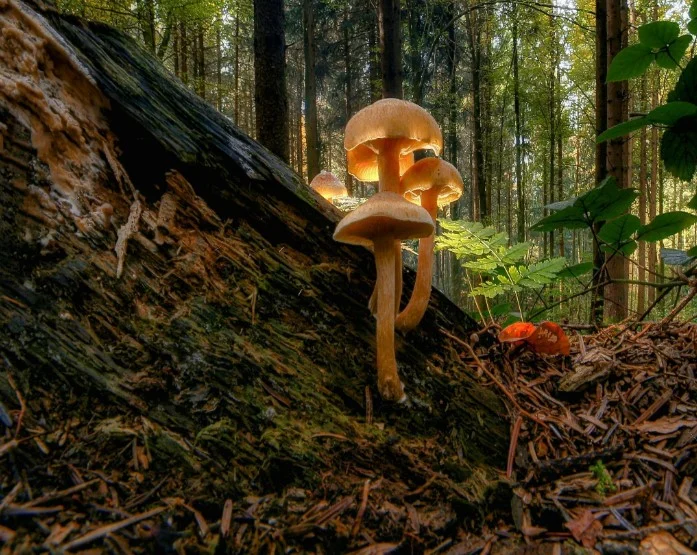
Glowing mushrooms might sound like imaginary decorations from a fantasy forest, but bioluminescent fungi genuinely exist.
Certain species produce visible light through chemical reactions occurring inside their cells. The resulting glow is often greenish and can be observed in sufficiently dark environments.
Unlike mushrooms illuminated by external light, these organisms generate the light themselves.
Examples include species belonging to the genus Mycena, along with other bioluminescent fungi found in different regions of the world.
Researchers have investigated whether this unusual characteristic might help attract insects involved in dispersing fungal spores, although its function can vary between species.
The appearance of glowing mushrooms is particularly striking because their delicate structures can illuminate sections of decaying wood or forest vegetation.
For anyone interested in unusual natural phenomena, bioluminescent mushrooms provide an extraordinary example of biological chemistry.
The World’s Largest Fungus Covers Thousands of Acres
When people imagine the world’s largest living organisms, whales and enormous trees usually come to mind.
However, one of the strongest contenders is a fungus growing beneath a forest in Oregon.
An individual Armillaria ostoyae fungus in Malheur National Forest extends across approximately 2,385 acres. Much of this enormous organism exists underground, spreading through networks of fungal tissue associated with tree roots.
The fungus is commonly called the Humongous Fungus because of its remarkable size.
Scientists have estimated that it may be thousands of years old, making it notable for both its scale and longevity.
What appears aboveground represents only a small portion of the organism. The interconnected underground structures account for much of its extraordinary extent.
This discovery challenges the familiar idea that a mushroom is simply a small structure growing out of soil.
Mushrooms Can Generate Their Own Air Currents
Mushrooms produce spores that must travel away from their original location to reach suitable environments for growth.
Wind plays an important role in this process, but research has revealed an unexpected ability.
Certain mushrooms can create localized air movements through evaporation.
As moisture evaporates from the mushroom’s surface, nearby air cools. Temperature differences then contribute to gentle air currents capable of carrying spores away from the mushroom.
This mechanism is especially useful in sheltered locations where natural wind movement may be limited.
The process demonstrates how fungi can influence their immediate surroundings through ordinary physical principles.
Although these air currents are extremely small compared with everyday winds, they can make a meaningful difference to microscopic spores.
It is another remarkable example of how apparently stationary organisms interact dynamically with their environment.
Mushrooms Are More Closely Related to Animals Than Plants
Mushrooms grow from the ground and often appear alongside trees, flowers, and other vegetation. This appearance makes it tempting to classify them as plants.
However, fungi belong to an entirely separate biological kingdom and share a more recent common evolutionary ancestor with animals than with plants.
Unlike plants, fungi cannot produce food through photosynthesis. Instead, they obtain nutrients by absorbing substances from their surroundings.
Many species break down dead organic matter, returning important nutrients to ecosystems.
Others establish relationships with plant roots, helping plants access water and minerals while receiving carbon compounds in return.
The familiar mushroom cap is typically only the reproductive structure of a much larger fungal organism.
These unusual characteristics reveal why fungi deserve recognition as a remarkable group of living things.
From glowing forest mushrooms to enormous underground networks and extraordinary relationships with insects, fungi continue to challenge expectations about the natural world. Their strange biology demonstrates that some of nature’s most surprising discoveries can be found in organisms people encounter every day.