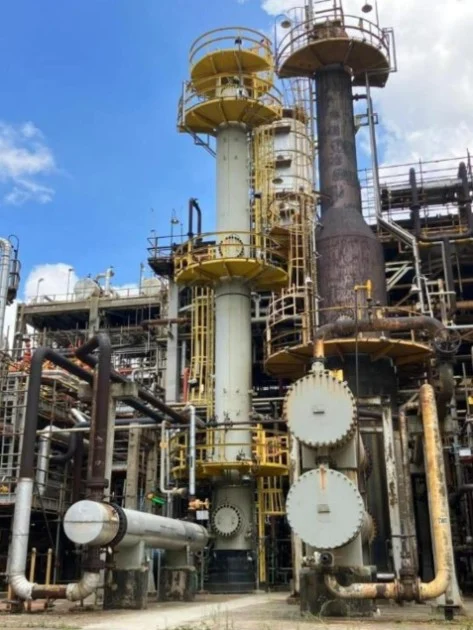
Industrial facilities often need to remove unwanted gases from process streams before releasing them into the atmosphere or sending them for further treatment. Gas absorption is one of the most widely used methods for separating specific gaseous components from industrial exhaust and process gases. At the centre of this process is the absorption tower, a piece of equipment designed to bring a gas stream into contact with a liquid that captures selected components.
Understanding how these systems work, the different tower designs available, and the factors that influence their performance can help manufacturers make informed decisions about industrial gas treatment.
What Is an Absorption Tower?
An absorption tower is a vertical vessel used to transfer one or more components from a gas stream into a liquid solvent. The process is known as gas absorption and relies on contact between the gas and liquid phases.
In industrial applications, it are used in chemical processing, fertiliser production, petroleum refining, metal processing, and other manufacturing operations. They can help control gaseous emissions, recover valuable chemicals, and support process efficiency.
The choice of tower design depends on several factors, including:
- The chemical properties of the gas and liquid.
- The concentration of the component being absorbed.
- Gas and liquid flow rates.
- Required removal efficiency.
- Operating temperature and pressure.
- Available space and maintenance requirements.
By considering these factors, engineers can select a gas absorption tower that meets the requirements of a particular industrial process.
How Does a Gas Absorption Tower Work?
Gas absorption generally involves bringing a gas mixture into contact with a liquid that has an affinity for a particular component. The unwanted gas transfers from the gas phase into the liquid phase through mass transfer.
In many industrial systems, the gas enters the tower from the bottom while the liquid solvent is introduced near the top. This counter-current arrangement allows the two streams to move in opposite directions, helping maintain a concentration difference that supports absorption.
The basic operating process includes:
- Gas introduction: The process gas enters the tower through an inlet designed to distribute the flow.
- Liquid distribution: The solvent is introduced and spread across the available contact area.
- Gas-liquid contact: The target component transfers from the gas into the liquid.
- Treated gas discharge: The cleaned gas leaves through an outlet, often passing through a mist eliminator to reduce liquid droplet carryover.
- Liquid collection: The solvent, now containing the absorbed component, is collected for treatment, regeneration, or disposal.
The efficiency of the process depends on the available contact area, residence time, chemical equilibrium, and the physical properties of the gas and liquid.
Types of Absorption Tower Used in Industry
Different tower configurations are designed to accommodate different operating conditions. Its main types used in industrial gas treatment include packed bed, spray, venturi, and tray towers.
1. Packed Bed Absorption Tower
A packed bed absorption tower contains packing material that creates a large surface area for gas-liquid contact. The liquid flows over the packing while the gas passes through the spaces between the packing elements.
The design supports efficient mass transfer and is often suitable for applications requiring effective absorption with relatively low pressure drop.
Common advantages include:
- Large gas-liquid contact area.
- Good absorption efficiency for suitable operating conditions.
- Flexibility in packing selection.
- Potentially lower pressure drop than some other tower designs.
The performance of a packed tower depends significantly on its packing arrangement, liquid distribution, and resistance to fouling.
2. Spray Tower
A spray tower introduces liquid through nozzles that create droplets within the gas stream. The droplets provide the contact surface needed for absorption.
Spray towers have a relatively simple design and generally offer low resistance to gas flow. They can be useful when handling gas streams containing suspended particles or when straightforward construction and maintenance are important.
However, their absorption efficiency depends on droplet size, liquid distribution, and the available contact time.
3. Venturi Scrubber Tower
A venturi scrubber accelerates the gas through a narrow passage, creating conditions that promote the formation of fine liquid droplets. These droplets provide a large contact area for transferring soluble components from the gas into the liquid.
Venturi systems are particularly useful in applications where gas treatment involves both particulate removal and gas absorption.
Their main considerations include pressure drop, liquid consumption, and the energy required to move the gas through the system.
4. Tray Tower
A tray tower contains horizontal plates or trays that help distribute liquid and create contact between the gas and liquid phases. Gas passes through openings in the trays, while liquid moves across the tray surfaces.
Tray towers can be suitable for processes requiring multiple stages of gas-liquid contact. Their performance depends on tray design, operating conditions, and the distribution of both phases.
The Importance of Absorption Tower Packing
Absorption tower packing plays an important role in determining how effectively a packed tower transfers components from the gas into the liquid.
Packing materials may include structured or random elements made from materials such as plastic, metal, or ceramic. The appropriate selection depends on chemical compatibility, temperature, pressure, and the physical characteristics of the process streams.
Important packing considerations include:
- Surface area: More available contact area can improve mass transfer when liquid distribution is adequate.
- Pressure drop: Packing geometry influences the energy required to move gas through the tower.
- Liquid distribution: Uneven wetting can reduce the effective contact area and create inefficient operating zones.
- Fouling resistance: Industrial gas streams containing solids or deposits may require packing designs that are less susceptible to blockage.
Packing selection should therefore be based on the complete process requirements rather than surface area alone.
What Is an Interpass Absorption Tower?
An interpass absorption tower is commonly associated with multi-stage gas absorption processes in which gas passes through an absorption stage before moving to another stage.
The term is particularly relevant in sulphuric acid manufacturing, where absorption stages are arranged around catalytic conversion stages. Gas leaving one absorption stage may return to the process for further conversion before entering another absorption stage.
This arrangement helps manage the concentration of process gases and supports the overall efficiency of the production process. The exact configuration depends on the process chemistry, operating conditions, and required product specifications.
Factors Affecting Absorption Tower Cost
The absorption tower cost can vary significantly depending on the process requirements, equipment configuration, and installation conditions.
Important cost factors include:
- Tower size: Larger gas flow rates generally require greater equipment capacity.
- Material selection: Corrosion-resistant materials may be necessary when handling aggressive gases or liquids.
- Tower configuration: Packed, spray, venturi, and tray designs have different construction and operating requirements.
- Internal components: Packing, trays, liquid distributors, and mist eliminators influence the overall equipment cost.
- Auxiliary equipment: Pumps, fans, piping, instrumentation, and liquid treatment systems may contribute substantially to the total project cost.
- Installation requirements: Site conditions, access, foundations, and commissioning requirements can affect project expenses.
Operating costs should also be considered. Energy consumption, solvent requirements, maintenance, and replacement of internal components can influence the total cost over the equipment’s service life.
Selecting the Right Industrial Absorption Tower
Choosing the appropriate absorption tower begins with a clear understanding of the gas stream, target contaminants, and required treatment performance.
Engineers should evaluate the gas composition, flow rate, operating temperature, pressure, solvent properties, and potential for corrosion or fouling. They should also consider whether the process requires gas absorption alone or a combination of absorption and particulate removal.
The most suitable system is one that balances absorption efficiency, operating reliability, maintenance requirements, and overall project cost.
A properly designed tower can support consistent gas treatment while helping industrial facilities meet their process and environmental objectives. With careful evaluation of the available designs and operating conditions, manufacturers can select an absorption system that aligns with their specific production needs.