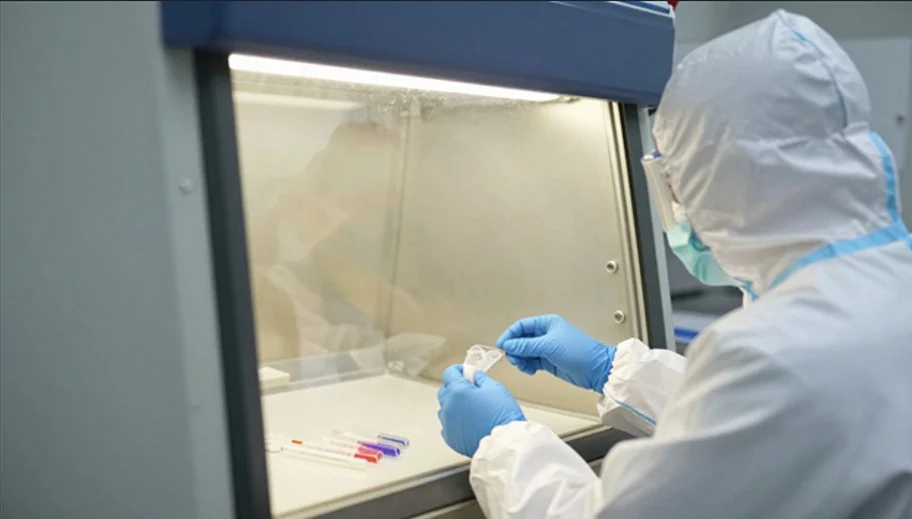
Walk into most procurement conversations about a new biosafety cabinet and the deciding factor is often the quote, not the protocol. Type A2 units are more common, cheaper to run, and easier to install, so they become the default. That works until the day someone plans to use a volatile solvent or a trace radiochemical inside a cabinet that was never designed to remove it. The choice between A2 and B2 is really a question about your agents and your chemistry, and it pays to settle it before the purchase order goes out.
Here is how the two compare, and how to match one to the work actually happening at the bench.
The three jobs a Class II cabinet has to do
Every Class II cabinet is built to deliver three kinds of protection at once. Personnel protection keeps aerosols generated at the work surface away from the operator. Product protection keeps the sample or culture clean by bathing the work zone in HEPA-filtered downflow air. Environmental protection treats the air the cabinet releases so that whatever was handled inside does not leave with it.
Both A2 and B2 deliver all three for biological material. The difference sits almost entirely in how each one manages the air after it has passed over your work, and that is where chemistry changes the answer.
How a Type A2 manages air
A Type A2 cabinet recirculates most of its air. After passing through the work area, air is drawn up, filtered through HEPA, and the majority (roughly 70 percent in a standard configuration) is returned to the cabinet as clean downflow. The remainder is HEPA filtered again and discharged.
That exhaust can go back into the room, or it can be routed outdoors through a canopy (thimble) connection. A canopy leaves a small deliberate gap between the cabinet exhaust and the building duct, so the cabinet’s airflow stays stable even if the exhaust fan stumbles. This design is efficient and flexible, and for labs working with biological agents alone, it is usually all that is required.
The limitation is chemical. Because most of the air recirculates back over the operator’s hands and face, a Type A2 suits biological work, or at most minute traces of volatile chemicals when it is vented outdoors. HEPA media captures particles. It does not remove solvent vapors or most gases.
Why Type B2 exists
A Type B2 cabinet takes a different approach: total exhaust. Nothing recirculates. All of the downflow and inflow air is HEPA filtered and then ducted out of the building through a dedicated, hard-connected exhaust system. Because vapors are pulled away rather than returned, a B2 is the cabinet you specify when the protocol involves volatile toxic chemicals or small quantities of radionuclides alongside the biological agents.
That capability comes with commitments. A B2 must be hard-ducted to its own exhaust blower, sized and balanced for the cabinet, and tied into interlocks or alarms so the operator knows immediately if exhaust is lost. Lose exhaust on a total-exhaust cabinet and you lose its containment logic, so the monitoring is not optional.
The cost and infrastructure gap
The running-cost difference is easy to underestimate. A B2 exhausts all of the air it uses, and that air has already been heated or cooled by your building. Every cubic foot sent outside has to be replaced with conditioned makeup air, around the clock in many facilities. Multiply that across a room of cabinets and the HVAC load becomes a real line item.
An A2 recirculates most of its air, so the burden on building conditioning is far lighter. If energy is a concern, this is where airflow controls matter: variable air volume and active sash sensing cut exhaust when a cabinet is idle or its sash is low, which trims the makeup-air penalty on ducted units. Manufacturers of Class II biosafety cabinets generally offer both A2 and B2 configurations, so the smarter comparison is total cost of operation over the cabinet’s life, not the sticker price alone.
Certification and what to confirm
Whichever type you choose, plan for it to be certified to the recognized biosafety-cabinet standard (NSF/ANSI 49 in North America) at installation and then on a regular schedule, typically annually and after any relocation. Certification checks the things a spec sheet cannot promise on its own: inflow and downflow balance, filter integrity, and containment under real conditions.
For a B2, confirm before installation that your facility can actually support dedicated ducting and the exhaust capacity the cabinet needs. Retrofitting that later is expensive. For an A2, decide early whether you need a canopy connection, since adding trace-chemical venting after the fact is harder than ordering it built in.
A short checklist to specify with confidence
Answer these before you commit:
- Are you handling biological agents only, or biological agents plus volatile or toxic chemicals? Biological only points to A2. Add hazardous vapors or radionuclides and you are looking at B2.
- Can the building support hard ducting and a dedicated exhaust blower? If not, a B2 is not viable without infrastructure work.
- What is the operating cost over several years, including makeup air, not just the purchase price?
- Have you budgeted for initial and recurring certification?
- Does the room layout and cabinet size fit the space, or do you need a made-to-measure unit?
If the honest answer is biological work, no volatile chemistry, standard room, an A2 will almost always serve you better and for less. The moment volatile or toxic chemicals enter the protocol, that math changes, and a B2 stops being an upgrade and becomes the requirement. Match the cabinet to the chemistry first, and the rest of the specification follows.