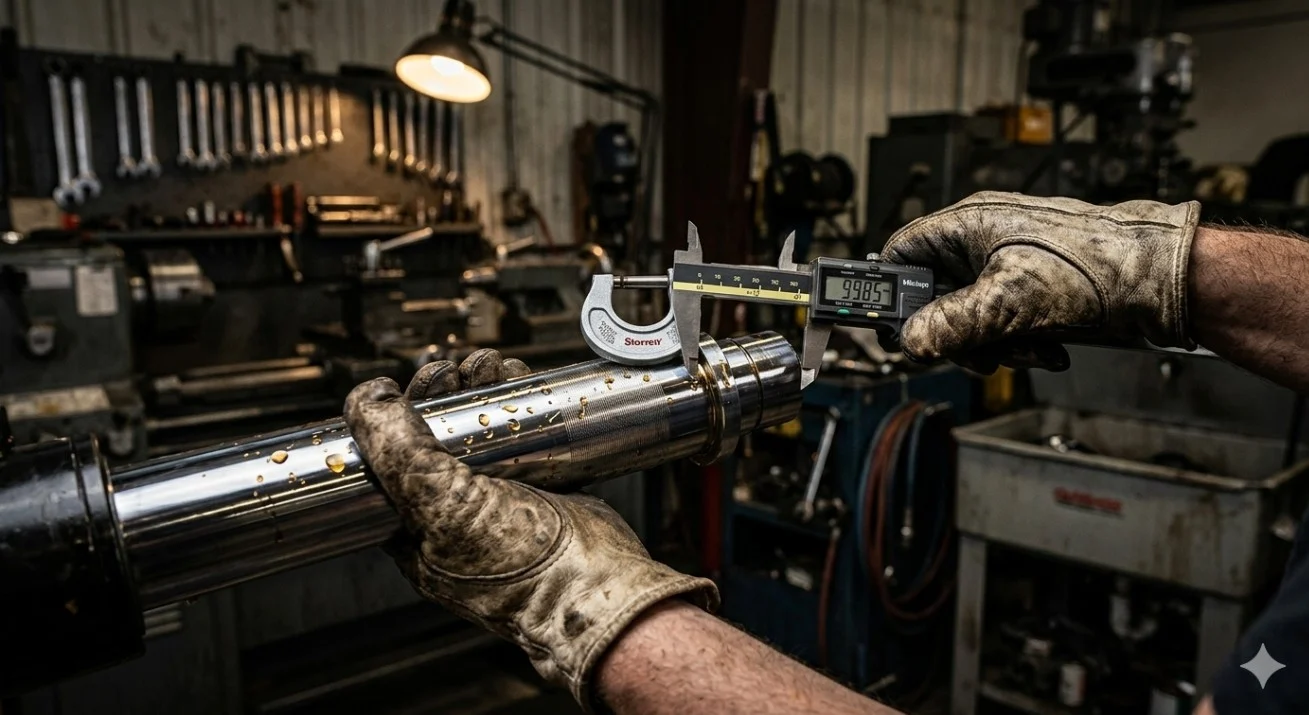
Most human hairs measure well under a tenth of a millimetre across. It’s a width few people ever think about. In hydraulic repair work, though, differences that small can decide whether a component runs smoothly for years or starts leaking within weeks.
Precision isn’t a buzzword in this trade. It’s the line between a repair that simply works and one that truly lasts.
Why Tiny Gaps Matter So Much
Hydraulic systems operate under significant pressure. Fluid inside a cylinder or pump pushes constantly against seals, surfaces and fittings, looking for any path to escape. The tighter and more accurate those surfaces are, the better they contain that pressure.
A rod that’s slightly out of round, a barrel with a faint scratch or a seal groove cut a fraction too deep can all create weak points. Fluid finds them. Over time, small leaks grow, efficiency drops, and wear accelerates. That’s why experienced technicians treat measurements with such care.
Measuring Before Touching
Great repairs begin with careful inspection. Technicians use micrometres, bore gauges and other precision instruments to check dimensions against specifications. They look for wear patterns, ovality, taper and surface damage.
This step can reveal problems invisible to the naked eye. A rod might look perfectly straight yet measure slightly bent. A barrel could look clean but wear unevenly along its length. Only accurate measurement shows the true condition.
Skipping or rushing this stage is one of the most common reasons repairs fail early. Guesswork simply isn’t good enough when tolerances are this tight. A few extra minutes with a gauge can save weeks of trouble.
The Surface Finish Story
Surface finish is another area where precision pays off. The inside of a cylinder barrel needs a specific texture. Too rough and seals wear quickly. Too smooth and oil can’t cling to the surface to lubricate properly.
Honing creates a pattern of fine crosshatched lines that hold a thin film of oil. Rods, meanwhile, often need a hard, polished chrome surface that resists corrosion and slides cleanly through seals. Getting these finishes right takes skill, the right equipment and patience.
Choosing the Right Seals
Seals come in countless shapes, sizes and materials. Each is designed for particular pressures, temperatures, speeds and fluids. Fitting the wrong seal, even one that looks similar, can shorten a component’s life dramatically.
Great technicians match seals carefully to the application. They consider whether the machine works in extreme heat, handles shock loads or operates in wet or dusty conditions. They also check that grooves are clean and correctly sized so the seal sits exactly as intended.
Straightening and Machining
When rods bend or components wear, machining may be needed to restore them. This work demands accuracy. Straightening a rod requires controlled force and repeated measurement. Machining new parts, such as glands or pistons, means working to tight tolerances so everything fits together properly.
Quality workshops invest in machinery capable of this level of accuracy and in people trained to use it well. The results show in components that assemble cleanly and operate without binding or leaking.
Cleanliness as Part of Precision
Precision isn’t only about measurements. Cleanliness plays a huge role too. A single particle of grit trapped during reassembly can score a surface or damage a seal. Contaminated fluid acts like sandpaper inside a system.
Careful workshops keep assembly areas clean, flush components thoroughly and protect open parts from dust. It might seem basic, but this discipline prevents a surprising number of premature failures.
Testing Under Pressure
Once a component is rebuilt, testing confirms whether the work meets the required standard. Pressure testing checks for leaks and verifies that the component holds pressure as intended. Cycle testing can reveal binding, uneven movement or other issues that only appear during operation.
Testing turns confidence into proof. It gives both the technician and the customer assurance that the repair will perform in the field.
What Customers Should Look For
For equipment owners, understanding the role of precision helps when choosing a repair provider. Questions about measurement processes, testing and seal selection can reveal a lot about a workshop’s standards.
People searching for Finer Hydraulics hydraulic cylinder service and maintenance are usually looking for exactly this kind of attention to detail. They want components returned in a condition that matches, or even improves on, the original specifications. They also want repairs that hold up in real working conditions rather than failing after a few weeks.
A good provider will happily explain how they approach each job. Openness about process is often a sign of confidence in the quality of the work.
Documenting the Details
Precision also extends to record-keeping. Careful workshops note the measurements taken, the seals fitted and the test results recorded for every job. Those notes become valuable the next time the same component comes in, showing how it has worn and whether its operating conditions have changed.
Good records also help owners plan. If a cylinder shows steady wear on each visit, it becomes easier to predict when it might need more substantial work. That foresight turns maintenance from a reaction into a plan, which suits businesses trying to keep their machines busy and their budgets predictable.
The Payoff of Getting It Right
Precision takes more time and care upfront. Measuring thoroughly, machining accurately and testing properly all add to the effort involved in a repair. Yet the rewards are substantial.
Components last longer, machines run more efficiently, and unexpected breakdowns become less common. Over the life of a piece of equipment, those benefits usually outweigh any extra cost many times over.
A Culture of Care
Ultimately, precision reflects a mindset. Technicians who take pride in their work pay attention to details others might overlook. They measure twice, clean carefully and refuse to send out a component they wouldn’t trust on their own machine.
That culture separates good repairs from great ones. The difference may be only a hair’s width, but its impact is felt every time a machine lifts, pushes or turns exactly as it should.