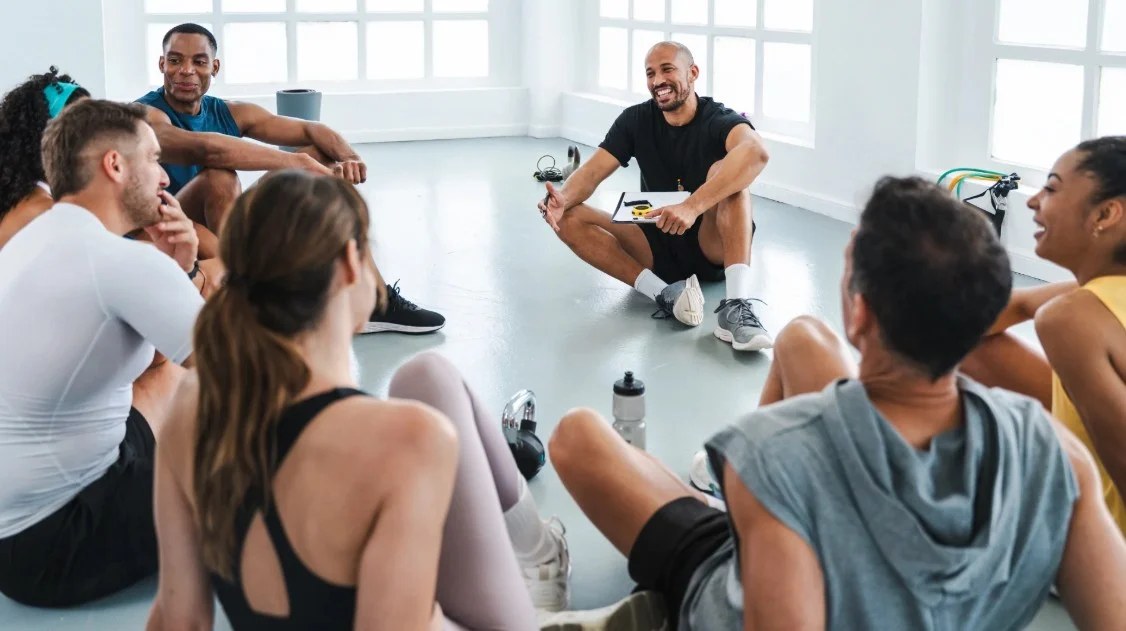
A standard fitness class usually follows one plan for the whole room. The instructor demonstrates the movement, sets the pace, and keeps everyone moving through the same session. Advanced small-group training works differently, with functional training programs built around individual goals, movement quality, training history, and progress while preserving the energy of a shared workout. That difference changes how exercises are chosen, how difficulty is adjusted, and how progress is measured over time.
The Group Is Smaller for a Reason
In a large class, one instructor has limited time to watch every repetition closely. Small-group training gives the coach more room to notice how each person moves. Someone with strong lower-body strength but limited shoulder mobility should not receive the same exercise setup as someone with the opposite profile.
A smaller group also makes individual corrections more practical. The coach sees when posture changes under fatigue, when a weight is too heavy, or when an exercise has become too easy. Those details shape the next set instead of waiting until the next session.
Progressions Replace the One-Level-Fits-All Model
Advanced programs usually start with some form of assessment. Strength, mobility, conditioning, movement control, training experience, and personal goals all influence where someone begins.
The same exercise pattern then has several versions. One person performs a basic squat variation, another adds resistance, and a more experienced participant works with a harder variation or a different tempo. Everyone trains together, but they are not forced into the same level.
This is also where regressions matter. Reducing load, shortening range of motion, or changing the exercise is not a step backward. It keeps the movement useful while technique catches up with ambition.
Coaching Goes Beyond Counting Reps
A good small-group session involves more than calling out the next exercise. The coach watches how the movement looks, how quickly fatigue appears, and whether the chosen weight still matches the goal of the session.
Rest periods, tempo, exercise order, and load all change what the workout actually trains. A person focused on strength needs a different structure from someone training mainly for conditioning. Small-group coaching makes room for those differences without turning the session into several unrelated personal-training appointments happening at once.
A Personalized Class Still Requires Plenty of Organization Behind the Scenes
Members usually see the workout, the coach, and the schedule on the front end. Behind that, a well-run program depends on careful staff coordination. Instructors have different specialties, class times shift throughout the week, certifications need current records, new employees need onboarding, and attendance has to match actual sessions worked. Payroll also gets more complicated when trainers are paid by the hour, by the class, or under different rates for different duties. Many of the administrative areas discussed in reviews of green leaf business solutions – scheduling, timekeeping, credential records, and payroll tracking – are the same ones that keep a fitness program organized behind the scenes. That structure matters because small-group training relies heavily on consistency. Members notice when coaches change constantly, sessions start short-staffed, or schedules move without warning.
Fun fact: People often associate workout progress with heavier weights, but better technique is also measurable progress. A cleaner squat, steadier balance, longer controlled tempo, or improved range of motion shows that the body is handling the same movement with more control.
Progress Becomes Easier to Track
Advanced small-group training usually treats progress as something specific rather than a vague feeling that workouts are getting harder. Coaches track changes in strength, body composition, conditioning, movement quality, or performance markers tied to the person’s goals.
That information affects future sessions. If strength rises but movement quality drops, load probably increased too quickly. If conditioning improves while recovery stays poor, training volume needs another look. Progress tracking keeps the program connected to what is actually happening instead of relying on variety for its own sake.
Group Energy Without Getting Lost in the Crowd
The social side still matters. Training beside familiar people adds energy and gives the session a shared rhythm, but the group does not replace individual attention.
That balance is what separates advanced small-group training from a standard class. People still train together, yet the workout leaves room for different starting points, different goals, and different rates of progress. The strongest programs make the group feel motivating without making anyone feel anonymous.