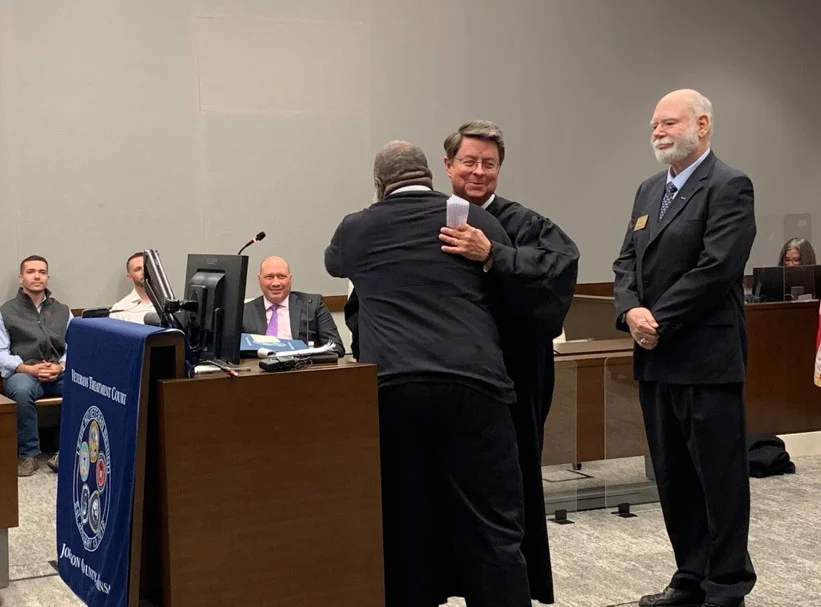
Many troops returning home carry invisible burdens that no one else can see.” Some experience post-traumatic stress, sadness, anxiety or substance use problems. These problems influence your day-to-day existence and sometimes create legal issues. Usually, punishment first, in a normal legal process. Veterans Court takes a different course. It sees the person behind the accusation but also holds them accountable for what they did. That balanced approach provides many veterans a meaningful chance to rebuild their lives. Kansas City Specialty Courts in Kansas City go with this notion. Their aim is straightforward. Help people get to the fundamental reasons of criminal behavior and protect the public. Organizations like Beyond the Bench KC are aiding in this mission to raise awareness and community support for these courts throughout Kansas City, Missouri.
Why a blanket sentence doesn’t fit every veteran
Not all criminal cases start the same way. Military service may be followed by trauma for a veteran. Others may get alcohol or drug addictions trying to cope with terrible memories. Those concerns don’t justify illegal activity, but they typically explain how you got to that position. In the traditional system, the standard sentence is a fine, probation, or jail time. Those fines may terminate the case, but they do little to address the actual problem. Veterans Court asks a different question. What kind of assistance does this person require to prevent a return to court? That tiny tweak makes all the difference.
The reality of the Veterans Court
Veterans Court is a problem–solving court. Veterans who qualify agree to follow tight guidelines while being treated and supported. Typically the program provides:
- Court hearings often
- Drug and alcohol testing
- Counseling for mental health
- Treatment of substance usage
- Case management
- Assistance with work or study
- Meetings with experienced mentors
These requirements are non-negotiable. Participants must have continuous growth. Court punishments might be imposed for missed appointments or failed drug tests. Often good progress is rewarded in a way that encourages more success. Think of it as physical therapy after an injury. It’s work to improve. Small steps matter, and consistency is key.
The power of veteran mentors
One thing that sets Veterans Court apart. Each participant can be paired with a volunteer mentor who is also a military veteran. That common background creates trust rapidly. Sometimes it’s easier to hear counsel from someone who has been there. A mentor can provide practical aid, encouragement and accountability. They get it, military culture, stress, that hard transition back to civilian life. And often, this link becomes one of the strongest sections of the presentation.
Treatment requires accountability
Some people view treatment as no penalty. It doesn’t. Veterans Court expects participants to obey all rules stated by the judge. They go to therapy sessions, make appearances in court, fulfill community responsibilities if mandated, and remain committed throughout the program. The court team is monitoring progress carefully. If someone is lagging behind, it’s a quick answer. That could mean more therapy, more frequent check-ins or other consequences. People win, the court acknowledges it. The combination of support and accountability keeps people going ahead.
Why it’s also good for communities
When we help veterans, we help our whole community. Those who obtain effective therapy often can prevent future arrests. They are more stable at home and at work. Families rebuild trust . Children have better support systems. Taxpayers gain too. It costs to have someone in jail. Long term treatment and supervision generally decreases repeat offenses, saving the judicial system money in the future. Less return traffic to court is a win for everyone.
Who would qualify?
Eligibility depends on a number of factors. Each case is carefully reviewed. The courts also take into account the person’s military service, criminal history, present offense, and whether the therapy is appropriate for the person’s needs. Eligibility may be affected by violence, previous convictions and other legal matters. Every case is different. The court will consider if Veterans Court is the proper remedy.
More than a court room
Veterans Court is a collaboration of various professions. Judges, prosecutors, defense attorneys, treatment providers, probation officers and veteran mentors operate as one team. Each person plays a different part, but to the same end. Help veterans live safer, healthier lives while protecting the community. That team work really helps. To be honest, it’s not so much separate agencies but people pulling the same rope.
Role of the Kansas City Specialty Courts
Veterans Court is inside the greater Kansas City Specialty Courts system. These courts are problem-solving courts that often bring people into the justice system. They know that in many cases treatment, education and supervision can yield better long-term results than punishment alone. Beyond the Bench KC plays a critical role in educating the public about this purpose. The group believes that true justice is done by addressing the root causes of criminality rather than simply reacting to the result. That message has been getting support around Kansas City.
Looking forward
Military service requires courage and sacrifice. It’s not always simple to transition into civilian life. Veterans Court provides qualifying veterans an opportunity to take responsibility and get treatment for issues under the surface. It’s a complex process. It takes commitment, honesty and hard work. But many graduates depart with better families, better habits and brighter careers. That’s good for the veteran, good for the courts and good for Kansas City as a whole.
Frequently Asked Questions (FAQs)
- What is the Kansas City Veterans Court?
Short Answer: Veterans Court is a special court designed to provide treatment for eligible veterans, while still holding them accountable for criminal charges.
Detailed Answer: Veterans Court does not only use traditional sentencing. Veterans Court uses court supervision with counseling, treatment, mentoring, and regular progress reviews . The goal is to reduce recidivism and help veterans build stable lives.
- Who is eligible for Veterans Court?
Short Answer: It depends on military service, criminal charge and details of each case.
Detailed Answer: Every applicant is individually considered. The court looks at the person’s service history, criminal record, treatment needs, and public safety before deciding if they are eligible.
- Is Veterans Court an alternative to jail?
Short Answer: No, not always.
Detailed Answer: In some cases, individuals do not go to jail because they successfully complete the program. Others may still face punishment if they don’t follow court rules, or if their case warrants additional punishment.
- What is the importance of veteran mentors?
Short Answer: They know what they’re doing.
Detailed Answer: Veteran mentors understand military culture and the myriad challenges faced by veterans. Their support helps participants stay motivated, achieve court goals and build confidence as they move through the program.
- How does Beyond the Bench KC help Veterans Court?
Short Answer: Beyond the Bench KC raises awareness of Kansas City Specialty Courts.
Detailed Answer: The organization promotes community support of specialty courts and their mission. Beyond the Bench KC helps people understand programs that support efforts to address the core causes of criminal behavior while promoting safer neighborhoods.